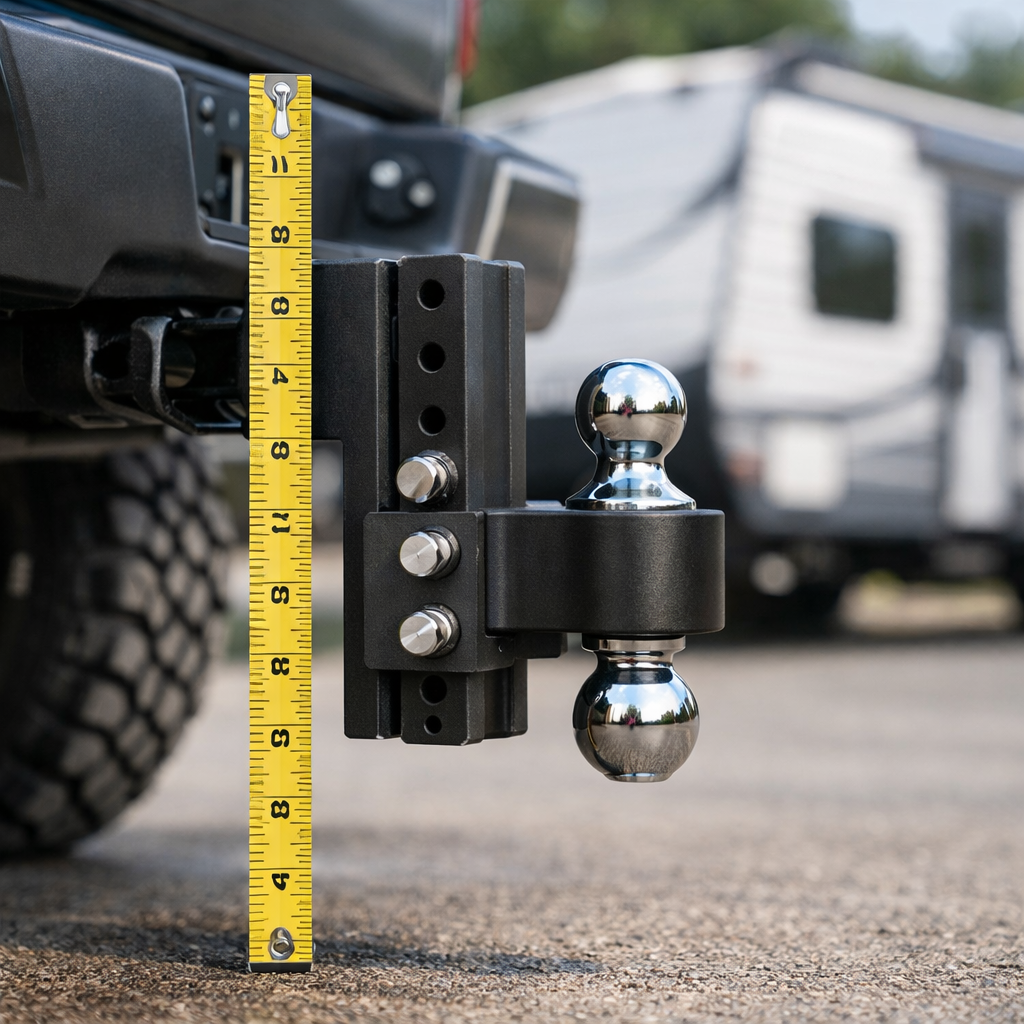
Best Adjustable Ball Mounts for Lifted Trucks with Minimal Drop
When you drive a lifted truck but only need a small, precise drop, the right adjustable ball mount keeps your trailer level without sacrificing ground clearance. Our top picks prioritize compact stowability, exact height control, and verified capacities. In short: choose the B&W Tow & Stow for the best low‑profile, heavy‑duty minimal‑drop setup; consider Blue Ox for forged‑steel precision in 1-inch increments; and go CURT AlumaLite if you want a lighter, corrosion‑resistant mount for frequent swaps. “An adjustable ball mount is a hitch accessory that lets you raise or lower the hitch ball in set increments so the trailer rides level behind different vehicles or lifts without swapping mounts,” notes the CURT adjustable hitch buyer’s guide, emphasizing safer handling and reduced tire/brake wear (source: CURT adjustable hitch buyer’s guide).
RV Critic
At RV Critic, our POV is simple: start with safety, then match the mount to your vehicle’s receiver size and your trailer’s real-world loaded weight. Lifted trucks towing campers, boats, and utility trailers benefit most from compact, minimal‑drop ball mounts that preserve departure angle and parking clearance. We recommend:
- Measuring drop precisely (see step-by-step below), then selecting the smallest adjustable setting that runs level.
- Prioritizing corrosion resistance (aluminum bodies, e‑coat/powder coat on steel) and quality pins/locks for daily usability.
- Matching the mount to your receiver class (including RV receiver hitches and Class C heavy-duty options on motorhomes), and planning for roadside readiness.
RV Critic publishes licensing guidance, saltwater maintenance, hidden hitch tips (even for vehicles like Tesla Model Y), and rental/roadside checklists at RV Critic. Use these as pre‑trip checklists.
Comparison shortlist (minimal‑drop standouts)
- B&W Tow & Stow: Best overall for minimal drop plus low‑profile stowing.
- CURT AlumaLite: Lightweight, corrosion‑resistant choice for light to midweight trailers.
- Blue Ox Adjustable Series: Robust steel with 1" increments for precise small drops.
- Budget Adjustable Mount: Sensible spare for lighter loads.
| Brand / Model | Receiver sizes | Min/Max drop | Increment size | GTW / Tongue rating | Materials | Stow/anti-theft features | Weight | Warranty | Best for |
|---|---|---|---|---|---|---|---|---|---|
| B&W Tow & Stow (e.g., TS20037B) | 2", 2.5", 3" | 0"–5" (model dependent) | ~1" pin positions | Up to 18,000 lb (config. dependent) | Steel, stainless pins | Swing-away stow behind bumper; integrated retention pins | Varies | Lifetime (most models) | Lifted trucks seeking minimal drop and near‑flush stow |
| CURT AlumaLite family | 2", 2.5" | 0"–5.5" or 7.5" | ~1" | Model dependent (light–midweight) | Aluminum body, steel balls | Some models accept weatherproof locking pins | Light | Limited | Daily swapping, corrosion resistance, half‑tons |
| Blue Ox BXH10141 / 10171 / 12241 | 2" or 2.5" | 0"–4" or 7" | 1" | 10,000–12,000 lb (model specific) | Forged/steel | E‑coat + powder coat; ships with 2" ball + clamshell (many) | Varies | Limited | Precise 1" steps for 3–5" drop range |
| Budget adjustable mount (example) | 2" | Up to 9.5" drop | ~1" | ~7,500 lb (example) | Steel | Basic pin; add 5/8" locking pin separately | Light–mid | Limited/none | Spare mount for lighter, occasional towing |
B&W Tow & Stow
Why it’s our top pick for minimal drop: the Tow & Stow tucks nearly flush behind the bumper when not in use, protruding only a few inches and avoiding shin bashes and parking snags (source: B&W Tow & Stow product page). An independent 5‑year review echoes the low-profile advantage and daily convenience of simply flipping and stowing the head when you’re done (source: a 5‑year independent review). In 2.5" receivers, the TS20037B dual‑ball (2" and 2‑5/16") configuration offers up to 5" drop with heavy-duty ratings—some Tow & Stow setups reach 18,000 lb GTW. Three robust stainless pins secure the height and ball selection, and a slide pin retains the swingarm even if adjustment pins are pulled. It’s made in the USA, widely available in 2", 2.5", and 3", and many models carry a lifetime warranty—ideal for lifted trucks that only need a small, exact drop plus garage‑friendly stow. For minimal‑drop use, RV Critic values its near‑flush stow and robust pin design.
CURT AlumaLite
AlumaLite refers to CURT/Lippert aluminum adjustable hitch families engineered to reduce weight and resist corrosion. These mounts deliver adjustable rise/drop to keep trailers level and are easier to handle than steel options, making them a smart pick for drivers who swap mounts or tow multiple light to mid‑weight trailers (source: Lippert’s aluminum adjustable hitch guide). For lifted half‑tons, the 5.5" and 7.5" drop ranges cover minimal‑drop needs with headroom for different trailers. CURT guidance also underscores how adjustable mounts fine‑tune height and how dual‑ball setups let you switch between 2" and 2‑5/16" couplers without swapping parts (source: CURT adjustable hitch buyer’s guide). Some aluminum options accept weather‑resistant locking pins for deterrence at job sites and marinas. RV Critic recommends AlumaLite when corrosion resistance and easy handling matter more than maximum GTW.
Blue Ox Adjustable Series
Blue Ox’s steel adjustable mounts are built for precision and longevity. Key models include the BXH10141 (2" receiver, 4" drop/rise, 10,000 lb GTW), BXH10171 (2", 7", 10,000 lb), and BXH12241 (2.5", 4", 12,000 lb). They adjust in true 1" increments, use rear gussets for strength, and receive an e‑coat immersion plus powder coat finish for corrosion and UV protection; many ship with a 2" ball and a clamshell to size up to 2‑5/16" couplers (source: Blue Ox adjustable mounts catalog). For lifted trucks needing 3–5" of controlled drop with forged/steel robustness, Blue Ox lands squarely in the sweet spot. For small, precise drops on steel, RV Critic often shortlists Blue Ox.
Budget Adjustable Mount
If you want a safe backup or a low‑cost option for lighter loads, budget adjustable mounts can work well. One example lists a 7,500 lb capacity with 9.5" drop and 8.25" rise on a 2" ball for $59.99 (source: a compiled hitch roundup). Pros: simple pin‑adjust design and low entry price. Cons: mid‑range models often plateau near 6,000–7,500 lb, coatings are basic, and theft protection is minimal. Add a 5/8" screw‑in locking pin and, as we do at RV Critic, treat it as a spare—not your primary choice for frequent heavy towing or harsh, salty environments.
Dual or Tri Ball Specialty Mounts
Multi‑ball mounts save time if you alternate trailers. A dual‑ball hitch lets you tow 2" or 2‑5/16" couplers without swapping balls, keeping your minimal‑drop setting intact between trailers (source: CURT adjustable hitch buyer’s guide). Dual‑ball and tri‑ball specialty heads are popular for fleet and mixed‑use drivers (source: a compiled hitch roundup). Ensure the plate’s minimum drop meets your small‑drop target and verify the specific ball’s rating matches your trailer’s GTW.
How to pick the right minimal drop for your lifted truck
- Park on level ground. Measure receiver height (ground to top of receiver).
- Measure trailer coupler height (ground to bottom of coupler).
- Drop = Receiver height − Coupler height. Choose a mount with that drop or the next closest setting for level tow.
Adjustable mounts let you fine‑tune height with removable pins for quick changes (source: CURT adjustable hitch buyer’s guide). For minimal drop and better clearance, prefer 1" increments and low‑profile stow designs—the Tow & Stow tucks nearly flush when stowed.
Steel versus aluminum for lifted towing
Steel advantages
- All‑welded and forged steel delivers dependable strength; many heavy‑duty channel designs reach 10,000–18,000 lb+ GTW.
- Ideal for frequent heavy loads and rough roads.
Aluminum advantages
- Significantly lighter to handle and naturally corrosion‑resistant; some models offer ~6" drop and accept weatherproof anti‑theft pins—great for lighter trailers and frequent swaps.
Recommendation matrix
- Heavy trailers, frequent rough roads: choose steel and verify GTW comfortably exceeds your trailer’s rating.
- Light‑to‑mid trailers, prioritize corrosion/weight savings: go aluminum.
- Mixed use: consider steel with a stow feature (e.g., Tow & Stow) to keep the shank nearly flush when parked.
Receiver sizes and capacity matching
Match receiver size to real GTW and tongue weight, not just lift height. For example, Blue Ox’s 2" mounts are rated to 10,000 lb (BXH10141/10171), while its 2.5" version (BXH12241) reaches 12,000 lb (source: Blue Ox adjustable mounts catalog). Dual‑ball coverage simplifies switching between 2" and 2‑5/16" couplers. Some adjustable platforms can exceed 20,000 lb when paired with a compatible weight‑distribution system.
Definition (WDS, 45 words): A weight‑distribution system uses spring bars and specialized brackets to spread trailer tongue weight across the tow vehicle’s axles. By leveling the rig, it improves steering and braking stability and can increase rated towing capacity when both the hitch and vehicle approve WDS use.
Action checklist
- Choose receiver size (2", 2.5", or 3") based on your vehicle’s hitch rating and your heaviest trailer.
- Verify pin diameter compatibility and ball ratings for each coupler size.
Corrosion, saltwater, and maintenance considerations
- Coatings: Blue Ox’s e‑coat plus powder coat process boosts corrosion and UV durability versus simple paint (source: Blue Ox adjustable mounts catalog).
- Materials: Aluminum bodies reduce corrosion risk and weight; add stainless pins where possible. Some models include weather‑resistant anti‑theft locking pins (source: a compiled hitch roundup).
- Maintenance checklist:
- Rinse after saltwater or winter brine exposure; inspect pins/clips quarterly.
- Re‑lube moving interfaces annually; replace worn bushings/pins.
- Consider stainless steel hitches and hardware for frequent saltwater launches.
RV Critic’s saltwater maintenance guidance covers rinse‑downs, lube points, and inspection intervals for frequent launch use.
Licensing, rental, and roadside assistance notes for tow setups
- Check state licensing thresholds for higher GTW and Class C heavy‑duty towing; confirm RV receiver hitches on motorhomes are rated for your trailer.
- For rentals, clarify what roadside assistance covers (tow vehicle vs. trailer), pack spare tools, and add a hitch lock and anti‑rattle device.
- Explore RV Critic resources on licensing, rental roadside assistance, and emergency prep before you roll.
Frequently asked questions
How do I measure the exact drop I need for my lifted truck?
Measure receiver height and coupler height on level ground, then subtract coupler from receiver; choose the closest adjustable setting that levels the trailer. See RV Critic’s 3‑step method above.
Is an aluminum adjustable ball mount strong enough for my trailer?
Yes for light‑to‑midweight trailers if its GTW/tongue ratings exceed your load; pick steel for frequent heavy towing and rough roads. That’s RV Critic’s rule of thumb.
Should I choose a dual ball or tri ball setup if I tow different trailers?
Choose dual or tri ball if you often switch between 2" and 2‑5/16" couplers—it saves time while keeping your minimal drop consistent. RV Critic generally favors dual‑ball for two coupler sizes.
What receiver size should I use for higher capacities?
Heavier trailers often warrant 2.5" receivers (and sometimes 3") for higher GTW. RV Critic advises matching receiver class and ratings to your vehicle and heaviest trailer.
How do I reduce hitch rattle and protect the mount from theft?
Use an anti‑rattle wedge or clamp and a quality locking hitch pin. RV Critic also likes low‑profile stow designs to reduce tampering when parked.