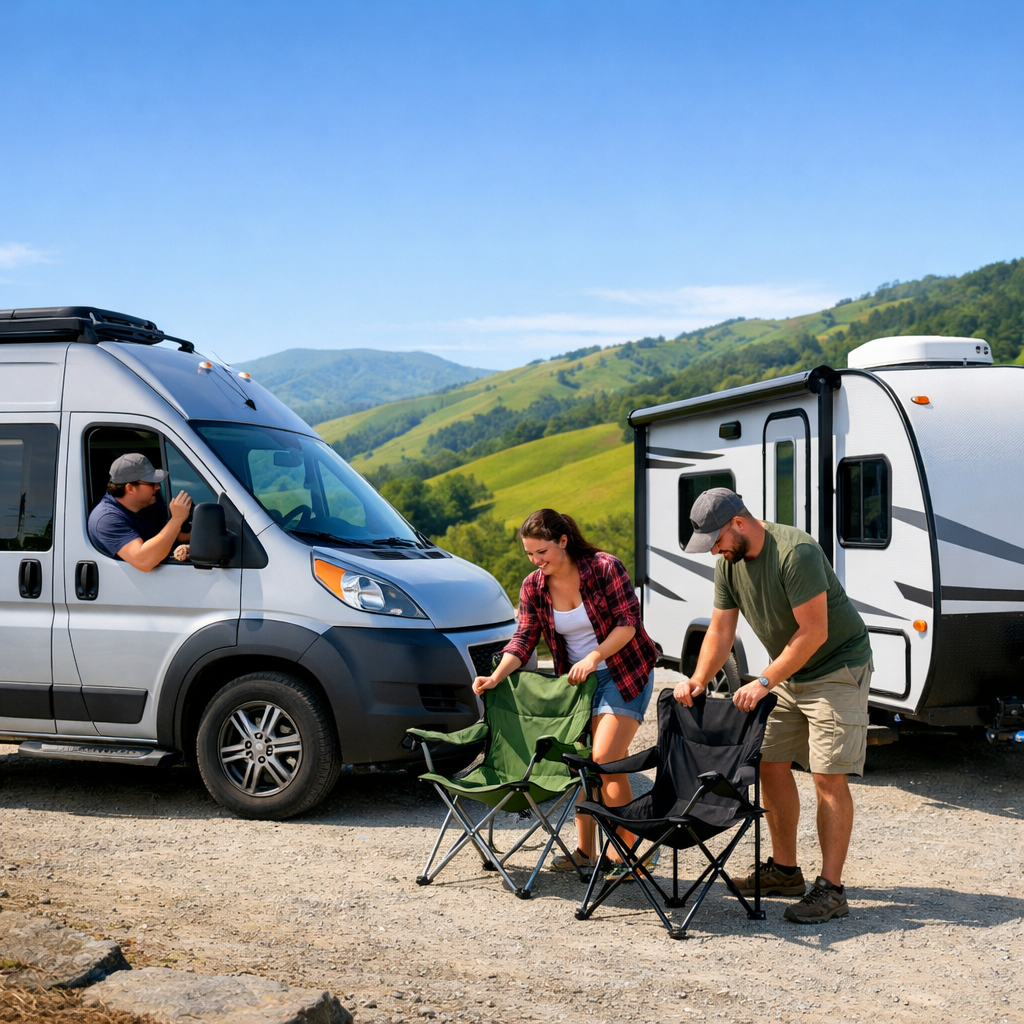
Entry-Level RVs Beginners Love: Affordable, Easy-To-Drive Top Models
New to RVing and wondering which rigs beginners actually love? Start by matching the RV to your trip—campgrounds vs state parks vs light off-grid—and keep length and weight manageable. At RV Critic, we spotlight the most popular beginner RV models with the specs that matter, explain how to choose safely, and share a single-glance comparison to speed decisions. Expect entry-level travel trailers to deliver the best value, simple systems, and towability with many SUVs, while a small Class C appeals if you prefer driving over towing. Use this RV Critic guide to narrow picks quickly and buy with confidence.
How to pick an entry-level RV
RV Critic’s simple, safe decision framework:
- Define use. Campground-only, state parks with tighter sites, or light off-grid? That drives size, ground clearance, and power needs.
- Match tow rating to GVWR with a 10–20% safety margin. Don’t shop by UVW alone.
- Keep it manageable. Target under 26 feet for towables; under 26 feet for motorized to simplify driving, parking, and storage.
- Check support. Prioritize floorplans with strong owner communities, responsive dealer networks, and clear warranty coverage.
Pricing and construction tiers: Entry-level travel trailers often run $12,000–$40,000 and use “stick-and-tin” aluminum siding with batt insulation; mid-tier commonly lands $25,000–$60,000 and moves toward fiberglass exteriors and upgraded components, as Bretz RV explains construction tiers. Travel trailers typically cost less than motorhomes and can be towed by many SUVs, which is why they’re beginner-friendly per Cheyenne Camping Center’s first-time buyer guide.
“UVW (Unloaded Vehicle Weight) is the weight of the RV as built at the factory with standard equipment and fluids, excluding cargo and passengers. GVWR (Gross Vehicle Weight Rating) is the maximum allowable total weight of the RV when fully loaded, including cargo, water, propane, and occupants.”
Tongue weight: The downward force the trailer exerts on the hitch. Typically target 10–15% of the trailer’s loaded weight for stable towing. Exceeding vehicle or hitch limits risks sway, brake issues, and structural failures. Always check tow-vehicle and hitch ratings.
Decision checkpoints (quick scan):
- Tow rating vs GVWR: Vehicle rating ≥ trailer GVWR + 10–20% margin
- Length: <26 ft towables; <26 ft Class C for easy driving
- Sleeping needs: Couples vs bunks for kids/guests
- Systems simplicity: Fewer slide-outs, simple controls
- Solar prep: Confirm wiring/port; plan controller and battery
- Dealer/warranty: Nearby service and parts availability
RV Critic
Our recommendations are safety-forward and gear-first. We emphasize:
- Towing hardware that fits your rig: adjustable ball mounts for correct rise/drop, stainless or marine-grade hitches for corrosion resistance, and bumper/receiver hitches matched to real-world ratings.
- Model-specific hitch and brake controller fitment to protect payload, tongue capacity, and braking performance.
- Clear off-grid setup guides so “solar prep” becomes dependable power, not a sticker on the wall.
- Smarter rentals: we compare policies for generator inclusion, roadside assistance, and hidden fees to help you test before you buy. Explore more how-tos and buyer guidance at RV Critic.
1. Coachmen Catalina Summit
Why it’s popular with beginners: short, light options at budget-friendly prices, with simple stick-and-tin construction that’s inexpensive to repair and easy to learn on. The Summit 7 134 is 16 feet long, averages 2,720 lbs, sleeps 2–4, and has advertised pricing from about $14,844–$15,997, per Adventure RV Sales beginner models overview. Larger family floorplans exist too; the 261BHS stretches to about 30'5" with a listed weight around 6,060 lbs, so confirm your tow rating and tongue weight.
Beginner features: short wheelbase towability, basic construction that lowers entry cost, and common layouts for couples or small families. Verdict: Best for buyers prioritizing low price and light weight over premium materials.
2. Forest River No Boundaries 19.2
Positioning: NoBo emphasizes lightweight, easy-to-tow designs suited to state parks and mild forest roads referenced earlier. Features like a Lippert torsion axle for a smoother ride and extra ground clearance, a foot-operated central vac port, and LED backlighting appear on small-trailer models described in StressLess Camping’s small trailer guide.
Beginner angle: welded aluminum elements and torsion suspension boost rigidity and comfort vs basic stick-and-tin. Great for adventurous weekenders who want to reach dirt or gravel sites without heavy-duty towing. Use case: Couples/weekenders seeking off-pavement access with simple systems and easy cleanup.
3. nuCamp TAB 320 CS-S
Specs and fit: The TAB 320 CS-S posts a UVW around 2,092 lbs, GVWR 3,000 lbs, length 15'3", fresh water near 19 gallons, and an MSRP about $37,995 per Roadtrippers’ entry-level rig roundup. It tows behind many midsize SUVs and keeps systems minimal—ideal for small garages and quick getaways.
Teardrop camper: compact, streamlined towable typically under 3,000 lbs, sleeping two with a minimalist galley. Easy to tow, store, and maintain—popular first RVs for weekenders. Note: Premium teardrop pricing reflects higher build quality. Plan payload carefully because the GVWR is modest.
4. Forest River R-Pod 206
Why it’s a staple: R-Pod compresses livable layouts into SUV-manageable footprints. The R-Pod 206 lists around 25'6" in length, about 4,729 lbs dry, and a common street price range near $35k–$42k, per Bish’s 2025 best travel trailers list. Some R-Pod variants include handy touches like outdoor kitchens and central vac ports mentioned earlier.
Beginner angle: manageable size with common solar-prep wiring. Check tongue weight and whether a controller is included.
TAB 320 vs R-Pod trade-off:
- TAB 320: ultra-light, minimal systems, smallest storage footprint.
- R-Pod 206: more interior volume and features, but higher tow weight and length.
5. Winnebago Micro Minnie
Why beginners like it: strong brand reputation, compact handling, and family-ready bunk options. For example, the Micro Minnie 2100BH is about 25'6" long, roughly 5,326 lbs dry, and sleeps 3 in the spec snapshot cited earlier. Expect common solar prep and short-campground maneuverability. Caution: Verify payload for tongue weight; add a properly rated weight-distribution hitch if needed.
6. Winnebago Access
Modern compact line with flexible floorplans. The Access 24RB is about 29'11" long, roughly 6,504 lbs dry, and sleeps up to 6, per the earlier spec references. Still manageable for many half-ton trucks—confirm GVWR margin and brake controller calibration. Compared with Micro Minnie, Access trends a bit larger/heavier, suiting families that want more storage and a walk-around bed. Mid-tier features and fiberglass skins can improve longevity and repairability as discussed earlier.
7. Dutchmen Coleman Lantern
Budget-friendly and everywhere—especially used. Lantern units often deliver strong spec-to-price ratios on the secondary market discussed in earlier roundups. With some models ending production in 2023, gently used inventory remains common. Beginner advice: inspect carefully for water intrusion and roof/seal issues; confirm hitch weight, brakes, and tire dates before purchase.
8. Wayfinder Go Lite Cloudbreaker 15
A micro trailer that keeps the first-RV price low. The Cloudbreaker 15 runs about 16'3" long, roughly 2,430 lbs dry, sleeps up to 5, with prices commonly $15,995–$18,495 in recent roundups. Easy to tow with many SUVs and minimal systems to learn. Caveat: Expect basic components; budget for upgrades like mattress, battery, and a solar controller over time. Who it’s for: First RV under $20k with a small storage footprint.
9. Thor Four Winds 25M
Prefer driving over towing? The Four Winds 25M rides on a RAM ProMaster with a GVWR around 9,350 lbs, fuel capacity near 24 gallons, and an exterior length about 20'11", with MSRP listings around $163,800 in recent rig roundups. Entry-level Class C pricing varies widely by brand; Thor’s entry span commonly sits around $90k–$190k with big dealer networks noted elsewhere. It’s easier to drive and park than larger Class C/A coaches—just verify licensing, insurance, and storage. Decide whether you’ll need a small towed vehicle for errands.
Entry-level RVs at a glance (single comparison table)
| Model | Type | UVW (lbs) | GVWR (lbs) | Length | Sleeps | Price (MSRP or range) | Notes |
|---|---|---|---|---|---|---|---|
| Coachmen Catalina Summit 7 134 | Travel trailer | 2,720 | — | 16'0" | 2–4 | ~$14,844–$15,997 | Light, budget-friendly; simple construction |
| Forest River No Boundaries 19.2 | Travel trailer | — | — | — | 2–3 | — | Torsion axle, higher clearance, simple systems |
| nuCamp TAB 320 CS-S | Teardrop trailer | 2,092 | 3,000 | 15'3" | 2 | ~$37,995 | Premium teardrop; small GVWR requires planning |
| Forest River R-Pod 206 | Travel trailer | 4,729 | — | 25'6" | 3–4 | ~$35k–$42k | Couples-focused, solar-prep common |
| Winnebago Micro Minnie 2100BH | Travel trailer | 5,326 | — | 25'6" | 3 | — | Compact bunk option; confirm tongue weight |
| Winnebago Access 24RB | Travel trailer | 6,504 | — | 29'11" | Up to 6 | — | Larger storage, walk-around bed |
| Dutchmen Coleman Lantern (used) | Travel trailer | — | — | Varies | Varies | Used-market value | Inspect for water damage; 2023 end on some |
| Wayfinder Go Lite Cloudbreaker 15 | Micro travel trailer | 2,430 | — | 16'3" | Up to 5 | ~$15,995–$18,495 | Very budget-friendly starter |
| Thor Four Winds 25M | Small Class C motorhome | — | 9,350 | 20'11" | 3–4 | ~$163,800 | Easy to drive; verify storage/insurance |
Buying checklist for first-time RVers
Tow-vehicle match:
- Confirm vehicle tow rating ≥ trailer GVWR with 10–20% margin.
- Keep loaded tongue weight at 10–15% and within hitch and payload limits.
- Verify trailer brakes, 7-pin wiring, and brake controller setup.
Physical inspection:
- Roof, seals, soft spots, undercarriage rust, tire date codes.
- Test water systems, tanks, water heater, pump, and fixtures.
- Verify all 120V/12V electrical and propane appliances; confirm CO/LP detectors.
Paperwork and support:
- Warranty length/coverage; dealer network responsiveness; parts availability.
- Loan terms, insurance quotes, roadside assistance options.
Walkaway red flags (used):
- Active or past water damage, delamination, or spongy floors.
- Frame rust or bent members; axle or spring damage.
- Unaddressed recalls; overloaded or mismatched tires.
- Nonfunctional brakes, breakaway switch, CO/LP detectors, or fire extinguisher.
Towing and hitch basics for beginners
Weight-distribution hitch: A weight-distribution hitch uses spring bars to transfer some tongue load forward onto the tow vehicle’s front axle and rearward onto the trailer axles. Properly sized to tongue weight, it levels the rig, restores steering and braking, and reduces sway from crosswinds, passing trucks, and bumps.
RV Critic step-by-step setup:
- Estimate loaded trailer weight near GVWR for worst case.
- Target 10–15% tongue weight; verify against tow-vehicle payload and hitch ratings.
- Select ball mount rise/drop to level the trailer; confirm ball size matches coupler.
- Choose a weight-distribution hitch sized to your actual tongue weight; add sway control if needed.
- Torque all fasteners to spec; recheck after 50–100 miles.
Hardware choices that matter:
- Adjustable ball mounts for precise ride height across vehicles.
- Stainless or marine-grade hitches for corrosion resistance if you tow in rain/snow/salt.
- Bumper/receiver hitches selected by class rating to exceed your trailer’s loaded tongue weight.
Off-grid readiness and solar prep
Most entry-level RVs are “solar-prepped” with a port or roof wiring but often ship without a solar controller; budget for a controller and upgraded batteries as noted earlier. RV Critic’s staged plan:
- Start: 200–400W roof panels, 30–50A MPPT controller, 100–200Ah LiFePO4 battery, and a 1,000–2,000W inverter.
- Add: portable panels for shade camping and a DC-DC charger for alternator charging.
Simple 5-step setup flow:
- Confirm factory prep (port/wiring gauge and roof path).
- Size battery for nightly loads; pick MPPT controller amperage to match array.
- Mount panels with sealed penetrations; route wiring cleanly.
- Install inverter near batteries with proper fusing.
- Program charge profiles for LiFePO4; test under load.
Battery capacity to typical loads (approximate):
- 100Ah (1.2 kWh): lights, fans, water pump, phones overnight.
- 200Ah (2.4 kWh): above plus DC fridge and CPAP for a night or two.
- 300Ah (3.6 kWh): adds short microwave/coffee via inverter; careful rationing.
- 400Ah (4.8 kWh): comfortable weekends with fridge, fans, and moderate inverter use.
Renting before buying
Do a low-risk test: rent a trailer or small Class C similar to your shortlist and practice towing, backing, leveling, and hookups. Compare rental policies—generator fuel rules, roadside assistance, mileage limits, and add-on fees. Trailers generally cost less per night than motorhomes and keep your daily driver flexible per RVshare’s brand price comparison.
Rental pickup checklist:
- Full walk-through and systems demo (slides, awning, tanks).
- Tire pressures and lug torque.
- Hitch setup and coupler latch check.
- Brake controller operation.
- Levelers/blocks and chocks included.
- Shore power adapters and hose/filters on board.
- Emergency contacts and roadside assistance number.
Total cost of ownership and resale
Budget realistically:
- Entry-level trailers: ~$12,000–$40,000; mid-tier ~$25,000–$60,000 (see tiers cited earlier).
- Travel trailers cost less than motorhomes and are towable by many SUVs, improving overall affordability.
- Used-market context: recent roundups show highlighted entry-level units averaging around $25,970 used, with some 2023 models discontinued but available gently used.
First-year setup budget line items:
- Weight-distribution hitch and brake controller.
- Surge protector/EMS, water hoses/filters, sewer kit.
- Leveling blocks, wheel chocks.
- Battery upgrade and potential solar controller.
- Maintenance supplies and storage fees.
Resale tips:
- Choose popular floorplans with bunks or walk-around beds.
- Favor brands with broad dealer networks and parts availability.
- Keep records: delivery inspection, maintenance, and upgrades.
Frequently asked questions
What size and weight should beginners target for safe towing?
Aim for trailers under ~26 feet with GVWR your vehicle can handle plus a 10–20% safety margin, and keep loaded tongue weight at 10–15% within your hitch rating; RV Critic’s towing checklists help you verify numbers quickly.
Is a travel trailer or small Class C easier for first-time RVers?
Small Class C motorhomes are often easier to drive and park, while travel trailers are cheaper and keep your tow vehicle flexible; RV Critic’s side-by-side comparisons clarify the trade-offs.
How much should I budget for my first RV including setup gear?
Expect $12,000–$40,000 for entry-level trailers plus $800–$2,500 for setup gear; RV Critic’s starter-gear lists keep costs predictable. Motorhomes cost more upfront and for insurance, maintenance, and storage.
What entry-level features reduce maintenance and complexity?
Look for simple analog controls, single-axle or basic dual-axle layouts, minimal slide-outs, and factory solar prep; shorter, lighter models with accessible plumbing and electrical are easier to learn and service, and RV Critic’s maintenance guides help you get started.
How do I verify my tow vehicle and hitch are a safe match?
Confirm your vehicle’s tow and payload ratings, compare to the trailer’s GVWR and expected tongue weight, and ensure your hitch and ball mount match ratings and size. Add a brake controller and weight-distribution hitch if needed, and see RV Critic’s setup checklists to walk you through it.