How Experienced RVers Manage Off-Grid Waste Without Odors or Hassles
Boondocking doesn’t have to mean battling smells or schlepping your rig to a dump station every few days. Experienced RVers keep waste management simple by running a system: use water and biology to break waste down, block odors with good venting and seals, and move waste safely with the right gear. This guide shows you the exact steps, tools, and habits that keep black and gray tanks under control off-grid—plus composting options that extend stays even longer. You’ll learn how to prevent RV black tank odor, manage gray water without moving your campsite, and follow dump-station etiquette so you leave no trace. At RV Critic, we champion a repeatable, low-drama system that works anywhere.
What off-grid waste management requires
Think in systems: prevent buildup, contain and vent odors away from living spaces, and maintain the plumbing parts that keep everything flowing. That’s what keeps boondocking waste management predictable. It’s also the baseline we use at RV Critic when evaluating off-grid setups.
- Black water is toilet waste and RV-safe toilet paper; it requires careful handling and treatment to avoid health risks, clogs, and odors (see Sea & Sand’s practical waste management guide). (Sea & Sand RV Park guide)
- Gray water is sink and shower runoff with soap, grease, and food particles that must be disposed of properly, not on the ground or in waterways. (Sea & Sand RV Park guide)
Why the three-part strategy works:
- Water barrier + biological treatment: Maintaining a water layer in the black tank and using bacteria/enzyme treatments prevents “pyramids,” digests solids and paper, and suppresses RV black tank odor at the source. (Unique Camping & Marine)
- Seals and venting: Working toilet seals, intact P-traps and AAVs (air admittance valves), and a clear roof vent keep sewer gases moving out, not back into the RV. (Daisy RV odor control tips)
- Sensor and valve maintenance: Clean sensors and lubricated valves mean fewer clogs, accurate readings, and stress-free dump sessions. (Daisy RV odor control tips)
Along the way, you’ll lean on a portable waste tank for off-loading, choose a composting toilet for RV long-stays if desired, use a tank sensor cleaner as needed, and follow dump station etiquette to stay compliant. RV Critic prioritizes simple routines that protect your tanks and the places you camp.
Step 1: Prepare your waste kit and supplies
Don’t improvise in the field—RV Critic stages a compact kit before you roll:
- Bacteria/enzyme black-tank treatment (liquid, powder, or tablet)
- RV-safe toilet paper
- Nitrile gloves
- Dedicated black-tank hose and a separate gray hose
- Spare blade-valve seal lubricant
- Portable “blue-boy” tank sized to what you can safely lift or tow
- Tank sensor cleaner for periodic de-gunking
RV-safe toilet paper, explained: It’s made to break down quickly in water, reducing clogs and residue that can foul sensors and valves. Because it dissolves fast, it moves with tank flushes instead of sticking to walls, and many biological treatments are formulated to digest it along with waste.
Most treatments are added through the toilet immediately after dumping, then dosed per use or weekly while camping. (Sea & Sand’s handling basics) Newer sanitation products are plentiful, so stock up before peak season; supply tightness can follow demand surges. (RV-Pro sanitation trends)
Step 2: Operate your tanks with water and biological treatments
- Start wet: After every dump, add a starter charge of water to the black tank (or at least fill the toilet bowl and flush). Use plenty of water with each flush to cool the tank, rinse walls, and keep solids suspended.
- Keep valves closed: Let black and gray tanks fill; dump at around two-thirds full for a strong, scouring outflow. (Sea & Sand’s handling basics)
- Choose biology over harsh chemicals: Bacteria/enzyme treatments digest waste and paper, control odors, and help keep sensors clean—without formaldehyde. This approach supports year-round, boondock-friendly operation—the approach RV Critic favors for dependable off-grid performance. (Unique Camping & Marine’s treatment overview)
Step 3: Contain and transport waste without moving your rig
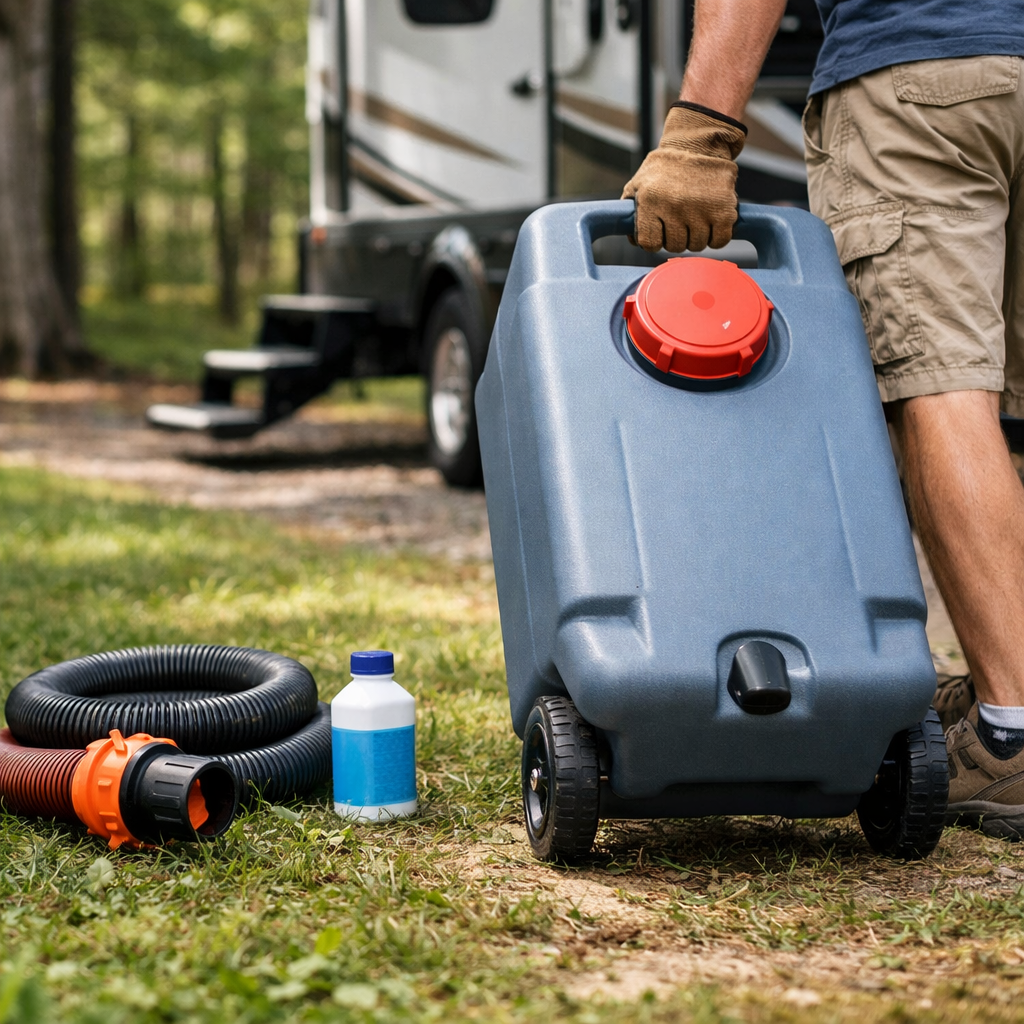
Portable waste tanks let you off-load gray or black water and wheel it to a dump station—no need to break camp. Pick a capacity you can manage when full to avoid strain and spills. (Sea & Sand’s handling basics) RV Critic also recommends walking or driving the route to the dump station before your first transfer.
A quick, clean workflow:
- Don gloves and make snug, leak-free connections to the RV and portable tank.
- Transfer waste when the RV tank is about two-thirds full; stop before the portable tank reaches its max line.
- Cap securely, then roll or tow the tank slowly to the dump station.
- Empty at the station, rinse the portable tank thoroughly, and drain fully.
- Add a small dose of treatment to the portable tank before stowing to suppress residual odors.
Never dump any waste on the ground or in waterways. It’s harmful to the environment and often illegal. (Sea & Sand’s handling basics)
Step 4: Venting and seal maintenance to block odors
- Clear the path: Keep the roof vent unobstructed, confirm P-traps hold water, and check AAVs on sink drains.
- Maintain odor seals: Keep a bit of water in the toilet bowl, and lubricate or replace worn blade seals as needed. (Daisy RV odor control tips)
- Neutralize room air: Use baking soda or activated charcoal in cabinets, change HVAC filters on schedule, and run a small dehumidifier in damp climates to reduce mustiness unrelated to tanks. (RV Depot’s odor-free RV checklist)
AAV, defined: An air admittance valve allows air into drain lines so traps don’t siphon; if it sticks or fails, sewer gases can enter the RV. Replace worn AAVs to restore proper venting. If you smell sewer gas inside, RV Critic starts with vent and seal checks before chasing tank treatments.
Step 5: Dumping etiquette, hygiene, and safe disposal
- Suit up and set up: Wear gloves, connect hoses firmly, and keep black and gray hoses separate. Use a dedicated black-only rinse hose for backflushing and tank rinses. (Daisy RV odor control tips)
- Time it right: Dump only when tanks are at least two-thirds full for a better flush. After dumping, add treatment through the toilet and a starter charge of water. (Sea & Sand’s handling basics)
- Leave it better: Rinse the area you used so the next RVer has a clean station. For composting solids, follow local rules for bagging and disposal—never ground-dump any waste. (Sea & Sand’s handling basics) RV Critic’s rule: leave it cleaner than you found it.
Composting and separating toilets for off-grid stays
A composting toilet separates liquids and solids and uses a small fan plus a carbon-rich medium (e.g., coco coir or peat) to neutralize odors, often allowing you to bypass the black tank entirely and extend boondocking time. Many owners report solids capacity of roughly 3–4 weeks for two people, with liquids emptied every 3–5 days when used correctly; models can perform in freezing conditions with proper installation and venting. (Air Head’s composting guide) RV Critic sees composting units as a major lever for extending stays when installed and used correctly.
Common features include vent fans, urine separators, and compact media systems that sip power—ideal for solar setups. Alternatives exist: incinerator toilets are nearly odorless but require substantial energy per burn cycle, which can challenge off-grid power budgets. (HomeBiogas off-grid toilet overview) (Off-Grid Now system comparison)
Grey water controls that prevent smells and clogs
Gray water can sour quickly thanks to soap scum, grease, and food bits. Dispose of it only at approved locations; ground discharge is often illegal unless explicitly permitted. (Sea & Sand’s handling basics)
- Use biodegradable soaps and sink strainers to keep fats and particles out of the tank.
- Flush the gray tank periodically with RV-specific treatments to freshen lines and reduce odors. (RV Depot’s odor-free RV checklist)
- During long boondocks, route gray water into a portable tank so you can roll it to a dump station and keep your rig stationary. (Sea & Sand’s handling basics)
Winter and full-time considerations
- Composting toilets in cold weather: They can work well if you protect vent runs, power the fan continuously, and follow normal emptying intervals—even in freezing temps. (Air Head’s composting guide)
- Full-time cadence: Inspect roof vents, AAVs, and blade seals regularly; keep HVAC filters fresh and use odor absorbers to prevent stale indoor air over long stays. (RV Depot’s odor-free RV checklist)
- Plan ahead: Coverage of the RV sanitation category notes brisk innovation and seasonal demand spikes—stock treatments, media, and spare seals before peak travel windows. (RV-Pro sanitation trends) RV Critic plans spares early to avoid mid-season shortages.
Equipment checklist for odor-free, low-hassle waste management
| Item | Purpose | When to Use | Pro Tip |
|---|---|---|---|
| Bacteria/enzyme black-tank treatment | Digest waste/paper, control odors | After every dump; dose per trip | Add through the toilet with a starter water charge |
| RV-safe toilet paper | Breaks down fast to prevent clogs | Daily use | Test by soaking: it should disintegrate quickly |
| Nitrile gloves | Hygiene at dumps and transfers | Every handling task | Keep a box at the wet bay |
| Dedicated black-tank hose | Safe, leak-free waste transfer | Dumping and backflushing | Label “BLACK ONLY” to avoid cross-use |
| Gray-specific hose | Gray-only transfers | Gray dumps/portable tank fills | Store separately from black hose |
| Portable “blue-boy” tank | Off-load without moving rig | Boondocking and extended stays | Choose a size you can safely maneuver when full |
| Blade-valve seal lubricant | Maintain toilet and dump-valve seals | Quarterly or when sticking | A quick lube often stops seepage and odors |
| Tank sensor cleaner | Restore accurate readings | Monthly or when sensors misread | Drive after dosing to slosh-clean walls |
| Composting/separating toilet (optional) | Extend stays; reduce black use | Long off-grid trips | Vent fan and dry medium are key to odor control |
| Activated charcoal/baking soda | Neutralize cabinet/room odors | Ongoing | Replace regularly for best effect |
Frequently asked questions
How much water should I keep in the black tank to prevent odors and clogs
Keep enough water to fully cover solids and always add a starter charge after dumping. RV Critic keeps valves closed and dumps around two-thirds full for the strongest flush and best odor control.
Are enzyme and bacteria treatments better than traditional chemicals
Yes—biological treatments digest waste and paper, control odors at the source, and help keep sensors clean without formaldehyde; RV Critic prefers them for boondocking and routine use.
How do composting toilets control odors and how often do they need to be emptied
They separate liquids from solids and vent air through a carbon medium, which prevents sewer gases from lingering. RV Critic’s rule of thumb: solids last about 3–4 weeks for two people, and liquids are emptied every 3–5 days with proper use.
When should I use a portable waste tank instead of driving to a dump station
Use one during boondocking or long stays so you can keep your campsite set up and wheel waste to a dump station. RV Critic recommends choosing a size you can handle safely when full.
What routine maintenance keeps tank sensors accurate and valves working
Run periodic sensor-clean cycles, keep sufficient water in tanks to rinse walls, and lubricate or replace blade seals as needed. RV Critic also verifies the roof vent and AAVs are working before assuming a sensor failure.