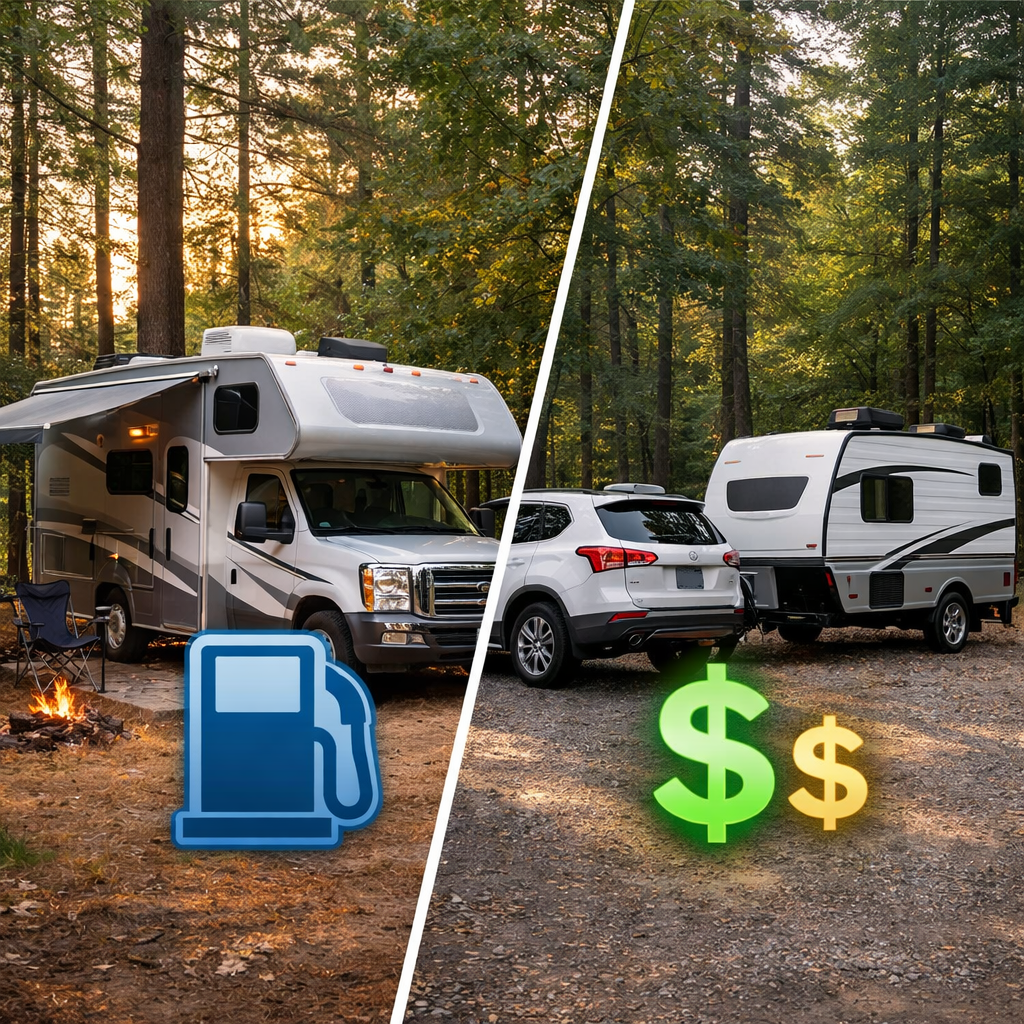
Motorhome vs Trailer: Which Is Cheaper for Short Weekend Trips?
Quick, 2–3‑night getaways call for an RV that’s fast to use and easy on the wallet. For most occasional weekenders, a small travel trailer usually wins on total cost: it’s cheaper to buy, insure, maintain, and fuel than a motorhome, and it often holds value better over time. That said, convenience matters. If you’ll take frequent short trips and want the fastest setup plus bathroom-and-snack access while rolling, a compact motorhome can earn its keep. Below, RV Critic breaks down real weekend costs—purchase price, depreciation, insurance, fuel, fees, storage, and time—so you can choose with confidence.
Quick answer
RV Critic’s takeaway: For short weekend trips, a small travel trailer is generally cheaper than a motorhome once you factor purchase price, insurance, maintenance, fuel, and depreciation, and trailers often retain value better for casual use, according to Bent’s RV comparison of travel trailers vs. motorhomes (https://www.bentsrv.com/blog/travel-trailer-vs-motorhome-pros-and-cons-for-every-rver?srsltid=AfmBOoruCG_sWCQ48YFQSBr6tiGSteBob1S44so9_bprsyrE_lJP7dXb). The exception: if you prioritize convenience (faster setup, restroom access underway) and use it often, a motorhome can justify the higher operating costs.
How we compare costs for weekend trips
Scope (RV Critic): 2–3 nights, ~100–400 miles roundtrip, staying at a typical hookup site or basic boondock spot. We consider both owners and renters.
What we include:
- Upfront price and financing
- Depreciation and resale outlook
- Insurance and registration
- Maintenance, tires, and repairs
- Fuel/mileage for a short radius
- Campground and dump fees
- Storage and HOA constraints
- Convenience/time cost (setup, driving ease)
Depreciation, in plain terms: It’s the loss in an RV’s value over time due to age, wear, and use. Motorized RVs add odometer miles that can accelerate value loss, while towables don’t log miles the same way—one reason trailers often hold value better for casual weekenders, as noted in ReserveAmerica’s trailer vs. motorhome explainer (https://www.reserveamerica.com/articles/camping/whats-better-a-motorhome-or-trailer/).
Upfront cost and depreciation
Entry pricing strongly favors towables. Pop-up campers can start around $4,000, and many small travel trailers land under $20,000, with popular teardrops and ultralights ranging up from there per ReserveAmerica’s trailer vs. motorhome explainer (https://www.reserveamerica.com/articles/camping/whats-better-a-motorhome-or-trailer/). For concrete MSRPs: the Timberleaf Classic lists at $23,900, and Forest River’s R‑Pod RP‑193 shows $37,433 in GearJunkie’s best camper trailers roundup (https://gearjunkie.com/camper-rv/best-camper-trailers).
Motorhomes cost far more. New Class A coaches commonly start near $140,000 and can run into the millions, according to FMCA’s Class A motorhome primer (https://fmcadventure.com/2024/11/13/class-a-motorhome/). Across the market, MSRPs range from under $20,000 to $300,000+ as tracked by Yahoo Finance pricing survey of affordable RVs (https://finance.yahoo.com/news/best-campers-trailers-rvs-cheap-110037121.html). For infrequent, short-trip use, towables’ lower buy-in and lack of odometer miles typically translate to gentler depreciation than motorhomes.
| Type | Typical new price | Depreciation pattern |
|---|---|---|
| Pop-up camper | ~$4,000–$15,000 | Low buy-in; holds up if lightly used and stored well |
| Small travel trailer/teardrop | ~$12,000–$40,000 | Generally steadier resale; no odometer miles |
| Class B motorhome (camper van) | Often into six figures | Faster depreciation tied to mileage and drivetrain age |
| Class A motorhome | ~$140,000 to $1M+ | High initial drop; mileage and systems complexity weigh on resale |
Fuel and mileage for short drives
Directionally, motorhomes burn more fuel than a tow vehicle pulling a small trailer. Motorhomes’ weight and frontal area reduce MPG; towing also lowers a truck/SUV’s MPG, but the combo is often thriftier over short radiuses, as summarized in Leisure CW’s motorhome vs. travel trailer guide (https://leisurecw.com/rv-life/motorhome-vs-travel-trailer-the-complete-comparison-guide-for-rv-owners/).
Fuel efficiency means how far you go per gallon. Expect roughly:
- Motorhome: about 8 MPG for a gas Class C/A on local routes
- Tow vehicle alone: ~14–20 MPG baseline, reduced to ~10–12 MPG when towing a small trailer
Example, 200‑mile roundtrip at $3.75/gal:
- Motorhome at 8 MPG: 25 gallons ≈ $94
- Tow vehicle at 10–12 MPG while towing: 16.7–20 gallons ≈ $63–$75
On short weekend loops, that $20–$30 difference adds up over a season.
Insurance and maintenance
Cost basics: Trailer insurance is typically cheaper than motorhome policies, and motorhomes tend to cost more to buy and maintain; repairs on a motorhome’s chassis and coach can outpace trailer fixes, per J.D. Power’s motorhome vs. travel trailer shopping guide (https://www.jdpower.com/rvs/shopping-guides/motorhome-vs-travel-trailer) and Lazydays’ motorhome vs. travel trailer overview (https://www.lazydays.com/rv-lifestyle/motorhome-vs-travel-trailer-which-rv-type-is-right-for-you).
Responsibility split:
- Trailer: Your existing tow vehicle handles engine/drivetrain service you already budget for; the trailer adds house systems, brakes, and tires.
- Motorhome: You add engine, transmission, chassis, and house systems in one unit—more parts, more potential service.
Budget checklist for weekend owners:
- Annual insurance premium
- Routine service (oil, filters, brakes); generator service if equipped
- Tire replacement intervals and costs
- Unexpected repairs (roof seals, appliances, slide mechanisms)
- Roadside assistance or extended service plan
Campground, storage, and fees
- Nightly rates: Campground fees are usually similar regardless of RV type; both towables and motorhomes can boondock to cut site costs on short trips.
- Storage: Small trailers often fit in driveways or side yards and are cheaper to store offsite. Motorhomes are bigger, face more HOA restrictions, and typically cost more to store.
- Common weekend line items:
- Nightly site fee (with/without hookups)
- Dump fees if no on-site sewer
- Propane refill or exchange
- Tolls (some charge extra for multiple axles)
- Optional: boondocking to save money
Setup time and convenience trade-offs
Motorhomes are usually faster to park and level than trailers, minimizing campsite fuss, as noted in Lazydays’ motorhome vs. travel trailer overview (https://www.lazydays.com/rv-lifestyle/motorhome-vs-travel-trailer-which-rv-type-is-right-for-you). On the road, passengers can access a bathroom or grab snacks without stopping in many motorhomes—an advantage highlighted in ReserveAmerica’s motorhome vs. trailer guide (https://www.reserveamerica.com/outdoors/motorhome-or-trailer.htm). Towing a trailer requires practice; backing and hitch work can add setup time for beginners.
Local errands and flexibility at camp
- Trailer advantage: Unhitch and use your tow vehicle for groceries, trailheads, or in-town dining without breaking camp.
- Motorhome workaround: Towing a small car (a “toad”) keeps flexibility but adds cost, complexity, and setup time that can undercut a quick weekend.
Rule of thumb: If you expect errands or exploring after setup, the tow-vehicle flexibility typically saves both fuel and time.
Rental costs for a weekend
Definition: Weekend RV rental costs combine the nightly rate, mileage fees (if any), generator hours, insurance, and cleaning. Rates vary widely by rig type, age, and season. RV Critic’s rental checklist below helps you account for these extras before you book.
Directionally, travel trailers rent for less per night than Class C or Class A motorhomes—mirroring ownership costs—making trailers the budget-friendly choice for short rentals.
Rental checklist:
- Confirm delivery/setup options for trailers if you don’t want to tow
- Verify your campsite’s length and hookup fit
- Understand insurance add-ons and deposit terms
- Check mileage caps, generator limits, and cleaning fees
When a motorhome makes sense for weekends
- You prioritize setup speed and maximum road comfort, including restroom/snack access underway.
- You’ll take frequent weekend trips, spreading higher upfront and operating costs over many uses.
- You like compact Class B layouts with van bodies for an easy-driving footprint and fewer exterior seams, as described in Consumer Reports’ beginner’s guide to motorhomes (https://www.consumerreports.org/other-motor-vehicles/beginners-guide-to-motorhomes-rvs/).
Caution: Expect higher purchase, insurance, and repair costs than comparable trailers.
When a trailer is the clear value
- You travel a few weekends a year and want the lowest total cost of ownership; small travel trailers are often recommended for beginners.
- You already own a capable tow vehicle and prefer leaving camp set while you explore locally.
- You care about resale resilience; trailers generally depreciate more slowly than motorhomes, especially with light use and proper storage.
RV Critic recommendations and next steps
A quick decision flow:
- How often will you go (months used per year)?
- Do you already own a suitable tow vehicle?
- Comfort with towing/backing vs. desire for fastest setup?
- Budget band (purchase + insurance + storage)?
- Storage options at home or nearby?
Bottom line: Choose a trailer for low-frequency, budget-first weekends; pick a motorhome for convenience-first, high-frequency use.
Before you roll:
- Gear up with RV Critic’s RV Gear Zone (https://www.rvcritic.com/) for essentials like leveling blocks, a surge protector, water pressure regulator, and chocks.
- Learn the basics with RV Critic’s Newbie Navigator towing checklist (https://www.rvcritic.com/) and step-by-step hitch/setup guides.
- Keep it running with RV Critic’s DIY & Upgrades coverage on maintenance, seal checks, and winterization.
- Find inspiration in RV Critic’s Adventure Stops for weekend-ready routes and campgrounds, and join our newsletter for seasonal checklists and deals.
Frequently asked questions
Is it cheaper to rent a trailer or a motorhome for a weekend?
Trailers typically rent for less per night than motorhomes and often have lower insurance add-ons, making them the budget pick for short weekends. See RV Critic’s rental checklist above to avoid surprise fees.
Do campground fees differ between motorhomes and trailers?
Nightly rates are usually similar regardless of RV type; both can boondock to reduce site costs on quick trips. RV Critic’s campground tips can help you match site length and hookups.
How much does fuel really differ on a short trip?
Motorhomes generally get fewer MPG than a tow vehicle pulling a small trailer, so fuel costs are often higher for the same route, though the gap narrows on very short distances. RV Critic’s planning guides show how to estimate trip fuel.
What if I already own a capable tow vehicle?
If you already have a suitable truck or SUV, a small travel trailer typically delivers the lowest total weekend cost because you avoid buying and maintaining a second motorized vehicle. RV Critic’s towing checklists cover capacity, hitching, and setup.
Which holds value better if I only travel a few weekends a year?
Travel trailers tend to retain value better than motorhomes, which can depreciate faster due to mileage—an advantage for infrequent weekenders. RV Critic’s storage and maintenance guides can help protect resale.